What is a snippet, you ask?
On Monday evenings, before getting started with our normal Monday Open Stage performances, Susan Sweeney Hermon and Anne Hurley, known affectionately as The Snippettes, offer some quick hot stage tips, new ideas and general unsolicited advice. These nuggets of wisdom, which we call snippets, come from peers, not pros. Our hope is that the information presented will help you to improve your stage presence and performance skills.
Do you have some performance wisdom to share? We’d love to hear from you. Please send your ideas to comms@rasputins.org.
Without further ado then, here are some snippets from The Snippettes…
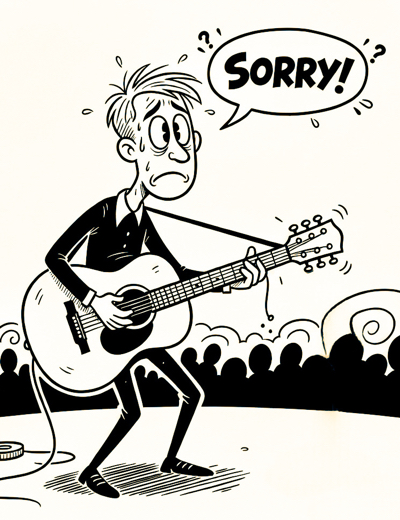
This is a stage at Rasputin’s Open Stage and you are performing for an audience. Often our ‘sorries’ and ‘apologies’ are coming from nerves and vulnerability. All performers make mistakes and apologizing can diminish rather than enhance your performance. It highlights possible errors that may not even be noticed by others. It’s a real challenge to let yourself be okay with your own vulnerability and being uncomfortable. Just give it a try and stop saying sorry and apologizing from the stage. You have something valuable to share and we want to hear it.
If there are more than two of you performing together at the Open Stage, please let Alan and Mark know before the Open Stage proceedings begin. Alan can place you appropriately in the line-up and it’s a good idea to give Mark a heads up of who is singing and what instruments they’re playing. We ask that four performers on stage at a time be the maximum.

When learning a new song or piece most of us approach it by repetition. We go over and over each part of the song until muscle memory kicks in, and eventually we stop thinking and just do it. But when we go to perform the piece in front of an audience, our fingers, no matter how skilled, may fail us. The rush of adrenalin and the stress of keeping our wits about us while remembering lyrics and accompanying notes and chords – all may undermine our many hours of practice, and the piece may fall apart.

Muscle memory is only part of the learning process. It’s important to use our cognitive function while practicing. Answer these questions to yourself: What key is this? What note am I playing at this moment? Where do I go from here? What chord follows this one?
Ears help, of course. And if something sounds wonky, eyes can help locate a wrong note.
Above all, if you’re stressed and your fingers freeze, go back to the cognitive, mindful, knowing part of your practice, and let this guide you through your performance.
As a singer, one of the most important things is for your audience to hear the lyrics. If they cannot hear your words, they will lose interest. Part of that responsibility is on the sound person to make sure the instruments are not louder than your words but you have a responsibility to make sure your words are heard. So tonight, our stage snippet is on Distance from the mic.
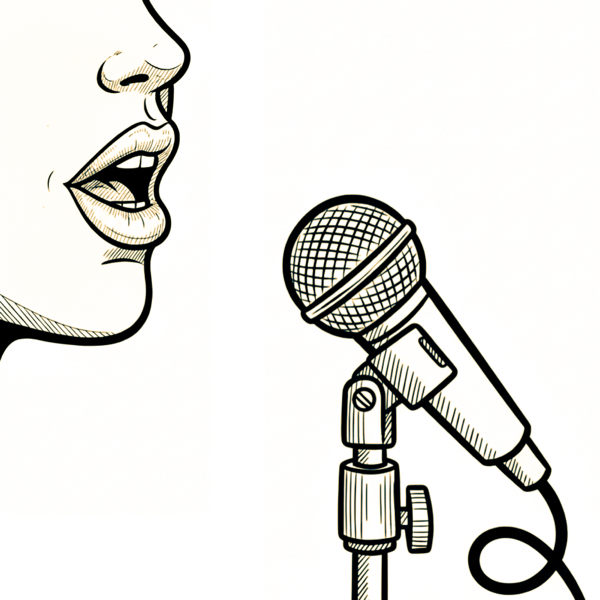
The microphones we use at the Open Stage are high quality. This is the distance you need from the mic to be heard well (a vertical hand from your lips). If you’re too close, your voice becomes boomy and muffled and we don’t hear what you are trying to sing for us. If you do this (move back and forth), we lose interest. You need to stay still in front of the mic. So practice at home. If you have a mic and stand at home, practice in front of a mirror. If you don’t have a mic and stand, attach a hairbrush to a broom and secure it some way so you are not holding on to it. Then sing your song into the mirror. Are you staying in place the whole time?
We have put up a couple of signs tonight to remind you to think about how far you are from the mic. Feel free to ask our sound people as well at the end of your performance how your mic distance was.
You have songs to share and we want to hear what you are singing, so take ownership of your Distance from the mic.
Last week’s snippet was all about ‘Distance from the mic” – the importance of allowing your audience to hear the lyrics to your song. To achieve this you need to ensure that your voice is placed just the right distance from the mic, about a vertical hand from your lips.

As a segue to this, another important factor in allowing your audience to hear your words is this: Enunciation, which is defined as clear pronunciation of words in speech and in song. Is enunciation cool or corny? It can depend on the musical genre and the intention of the artist.
Some indie or hip hop singers might blur words deliberately to give the song a certain edge or style. However, where a song is telling a story or carries an important message, as do the lyrics of our many talented song-writers here, it’s important for the words to be clearly understood. The key word for tonight is enunciation.
There are going to be some changes in relation to our sound technicians and to ourselves. This past week, we were very fortunate to have Robert Allan come and lead a two day workshop with Heather and 3 new sound trainees. Our new trainees are Andy, Allan and Jim. Along with Heather, two of them will be sitting at the board each Monday night for the next little while to try and get in as much practice as possible. Please be kind and understanding with them. They have lots of ability in their fingers to make you sound amazing or……

Robert fully encouraged us to be using two stage monitors each week and we are going to start trying that tonight. We have a long, spread out stage and it will be helpful for performers at one end of the stage to hear the person at the other end and play in time as well.
The sound technicians will be controlling the main speakers during your performance. They will not be adjusting your stage monitors unless requested to do so. We need to learn how to get what we want to hear from the monitors. If you need more or less of something in the monitor, let the person at the board know. You can do this after your first song by saying, for example, “May I please have more of my voice and less guitar in the monitor?” Or if you are in the middle of the performance and you would like something to change, Robert suggests using hand signals. Point at what you want to be changed and then use a thumbs up or down for more or less volume. This can be quite tricky to try and make these hand gestures while you are playing and singing and trying to remember lyrics or finding your lyrics on the page and making sure you are a good distance from the mic and not moving around the mic and enunciating your words and trying to have some eye contact with the audience and singing the song from your heart but it’s less disturbing to your performance to try and use these hand gestures to the sound person than to say in the middle of a song, “More guitar please.” The sound person is going to try and be watching as well. We all have some learning here.
One more thing, if you are singing harmony, back off the mic a bit and if you are singing melody with someone who is singing harmony, lean into the mic a bit. Remember, the sound person is controlling what is coming out of the main speakers. They are not hearing what is coming out of your monitor. Of course in a concert situation, we would be doing a full sound check, but on Monday nights, everything changes every two songs. That’s a big challenge to the sound person.
So bottom line, give lots of love to your sound technicians who are bravely learning how to make you sound wonderful.
For some reason, that oblong creature placed before our mouth on a stage has the power to intimidate many of us. All of a sudden, when standing or seated in front of a mic, we forget how or where to place our hands and fingers on our instrument, we forget the starting note or chord, we forget the words to our song, or what song we are even going to sing, we forget who we are, and why!
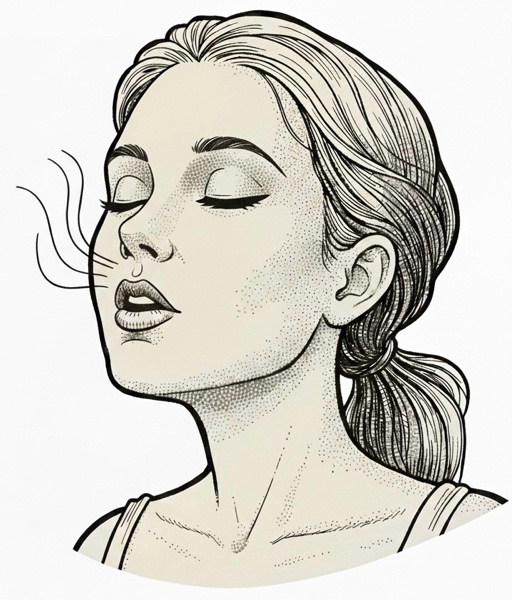
The most important thing not to forget is to breathe.Take a few seconds. Take a good breath. Gather your thoughts. Look at some friendly faces and smile. Your smile will convince your own self that all is well. Know where to begin, breathe, and go for it!
Your audience won’t mind that you carve a short moment to yourself before offering them something beautiful and worthwhile.